Outdoors · Wildlife
Pacific Marine Mammal Center
A nonprofit hospital for stranded seals and sea lions sits on Laguna Canyon Road, and its Visitor Yard is open to the public every day from 10 a.m. to 4 p.m.
- Hours
- Daily, 10 a.m. to 4 p.m.; closed four holidays
- Admission
- Free; donations encouraged
- Reservations
- Not required; strongly encouraged
- Parking
- Free gravel lot, limited; metered on Laguna Canyon Road
- Animals
- Service animals only; no pets
Where to go
Where to go
- Pacific Marine Mammal Center 20612 Laguna Canyon Road, Laguna Beach, CA 92651. Phone 949-494-3050.
What the center does
The Pacific Marine Mammal Center rescues, treats and releases stranded seals and sea lions from its base on Laguna Canyon Road. The center describes itself as a nonprofit and says its mission is ocean stewardship and conservation through animal rescue, rehabilitation, research and education.
The center says it began as Friends of the Sea Lion in 1971 with three volunteers, cared for animals at first at a private home under a state permit, and took over a barn in Laguna Beach in 1976 after the SPCA moved out. It calls itself the first marine mammal rehabilitation facility in California.
Visiting
The public area is the Bob Barker Visitor Yard. The center lists it as open seven days a week from 10 a.m. to 4 p.m., closed on Thanksgiving, Christmas Eve, Christmas Day and New Year’s Day. It may close on other days for weather and posts those closures on social media.
General admission is free, and the center says donations are highly encouraged. It runs a voluntary reservation system and strongly encourages reservations, though it does not require them. Free tours are available for small groups, and groups of 10 or more should follow the center’s group-visit link.
The address is 20612 Laguna Canyon Road, and the phone number is 949-494-3050. Parking is free but limited in a gravel lot on site; if it is full, metered parking runs along Laguna Canyon Road. The center says to look for the red barn. The center sits in the Laguna Canyon area. The parking guide covers town lots, and the getting around guide covers the trolley.
Service animals are allowed and must be harnessed, leashed or tethered unless that interferes with their work or the person cannot use those devices. Other pets are not allowed on the property. For questions about strollers or accessibility, call 949-494-3050.
What you see
The center says a visit lets you learn about marine mammals and ocean health, talk to volunteer docents, use interactive displays, see the rehabilitation pools, learn about water reclamation and visit the gift shop. Its education docents greet the public in the visitor yard and tell patients’ stories.
The patients are mostly California sea lions, northern elephant seals, northern fur seals and Pacific harbor seals. The center’s page on a patient’s journey lists California sea lions, northern elephant seals and harbor seals as the most common. It explains that seals and sea lions often rest on the beach and do not always need help, and that staff are trained to spot problems such as infection, malnutrition, pneumonia and entanglement in gill nets. Most arrive dehydrated, so staff tube-feed a blended fish formula and switch animals to whole fish once they are stable. Animals are released after they reach a healthy weight and compete for food, each with a color-coded tag. The home page also mentions live webcams of patients.
Programs and volunteering
The center runs distance learning with live chats, videos and activities, a community outreach program that brings staff presentations to groups, school programs that include a life-size inflatable gray whale named Winston, and summer programs with behind-the-scenes time with the animal care team. It also lists memberships and an Ocean Club for women in Orange County focused on ocean conservation.
Volunteer roles include visitor yard greeters, gift shop and outreach volunteers, education docents, and animal care volunteers, who prepare food, feed and weigh patients, clean enclosures and pools, and help with rescues and releases. Most positions require volunteers to be 18 or older. Junior Docent and Junior Outreach Assistant roles are for ages 15 to 17. You apply through the forms on the center’s volunteer page.
If you find a stranded animal
Do not approach it. NOAA Fisheries says to call the West Coast Region Stranding Hotline at (866) 767-6114 and lists the Pacific Marine Mammal Center, at (949) 494-3050, as the Orange County contact for live and dead animals. NOAA’s national reporting page says to keep people and pets at least 50 yards, or 150 feet, from the animal; its West Coast stranding page, which covers California, asks for at least 100 yards.
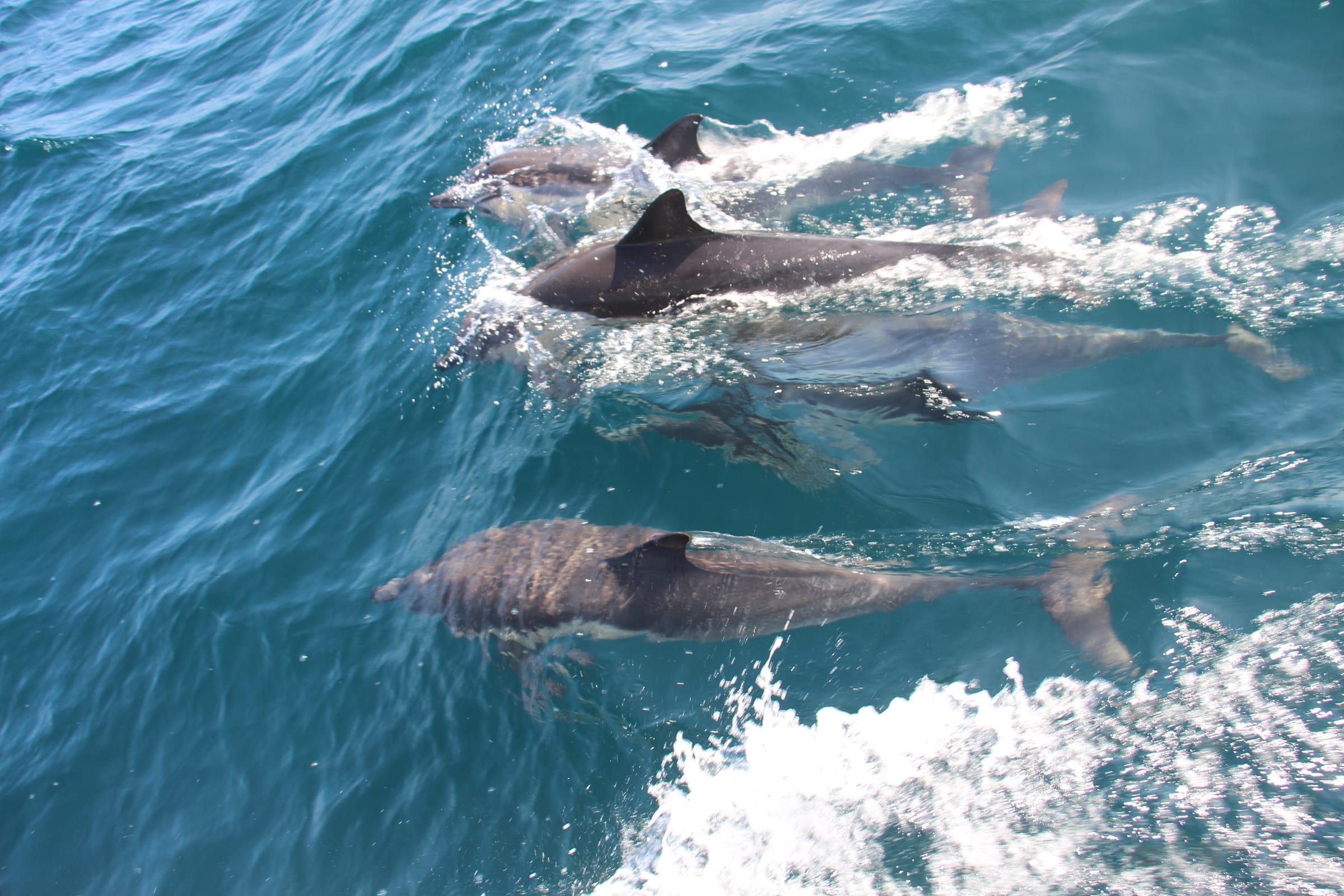
The center says seals and sea lions often come ashore to rest, so a resting animal is not always in trouble. For wildlife you can watch from the coast, see whale watching, and for the rules that protect the shoreline, see marine reserves.
Go with a guide
Tours, rentals and lessons
| Who | What their site offers | Checked |
|---|---|---|
| Pacific Marine Mammal Center | Free tours for small groups; open daily 10 a.m. to 4 p.m. at 20612 Laguna Canyon Rd |
Listed A to Z. Nobody paid to be here; we check each site and date it. Confirm times, prices and age limits with the business before you go.
Keep exploring
Related pages
-
-
-
-
-

-


Questions
Is the Pacific Marine Mammal Center free to visit?
Yes. The center says general admission is free and donations are highly encouraged. Reservations are not required but are strongly encouraged through its voluntary reservation system.
What are the Pacific Marine Mammal Center's hours?
The Visitor Yard is open every day from 10 a.m. to 4 p.m., except Thanksgiving, Christmas Eve, Christmas Day and New Year's Day. The center may also close for weather and posts those closures on social media.
Can you bring a dog to the Pacific Marine Mammal Center?
No. The center allows service animals, which must be harnessed, leashed or tethered unless that interferes with their work, and says pets other than service animals are not allowed on the property.
What should you do if you find a stranded seal or sea lion?
NOAA Fisheries says to call the West Coast Region Stranding Hotline at (866) 767-6114 and lists the Pacific Marine Mammal Center at (949) 494-3050 for Orange County. Its national reporting page says to keep people and pets at least 50 yards (150 feet) back, and its West Coast stranding page, which covers California, asks for 100 yards.
Thinking of moving here?
Get the printable moving checklist by email: before you move, moving week and your first 30 days.
Last reviewed
Sources (8)
- Plan your visit: Bob Barker Visitor Yard open 7 days a week 10am-4pm; closed Thanksgiving, Christmas Eve, Christmas Day and New Year's Day; free general admission with donations encouraged; voluntary reservations strongly encouraged; free limited gravel lot parking, metered parking on Laguna Canyon Road, red barn; address and phone; free tours for small groups; service animals allowed, pets not; what to expect: pacificmmc.org, checked 2026-10-27
- Home page: nonprofit marine mammal teaching hospital; open 10am-4pm every day except four holidays and weather closures; webcams; patients are California sea lions, northern elephant seals, northern fur seals and Pacific harbor seals; distance learning, community outreach, school programs with Winston the inflatable gray whale, summer programs; memberships; Ocean Club: pacificmmc.org, checked 2026-10-27
- About: mission; began as Friends of the Sea Lion in 1971 with three volunteers; state permit to house animals at a founder's home; took over a city-owned barn in 1976 when the SPCA relocated; first marine mammal rehabilitation facility in California; address: pacificmmc.org, checked 2026-10-27
- A Patient's Journey: how rescue, rehabilitation and release work; most common patients; tube feeding; color-coded tag on release: pacificmmc.org, checked 2026-10-27
- Volunteer: gift shop, community outreach, visitor yard greeter, education docent, marine science educator and animal care roles; docents greet the public in the visitor yard; most positions have a minimum age of 18; Junior Docent and Junior Outreach Assistant for ages 15 to 17; apply online: pacificmmc.org, checked 2026-10-27
- NOAA Fisheries national reporting page: West Coast Region Stranding Hotline (866) 767-6114; Pacific Marine Mammal Center (949) 494-3050 is the Orange County live-animal and dead-animal response contact; keep people and pets back at least 50 yards (150 feet) from a stranded marine mammal or sea turtle: fisheries.noaa.gov, checked 2026-10-28
- NOAA Fisheries West Coast Marine Mammal Stranding Network: for strandings off California, Oregon and Washington call 1-866-767-6114; let others nearby know to stay at least 100 yards away and keep pets 100 yards away: fisheries.noaa.gov, checked 2026-10-28
- Coordinates of the center: OpenStreetMap building way 842482189, Pacific Marine Mammal Center, 20612 Laguna Canyon Road, at 33.5730, -117.7625: nominatim.openstreetmap.org, checked 2026-10-27