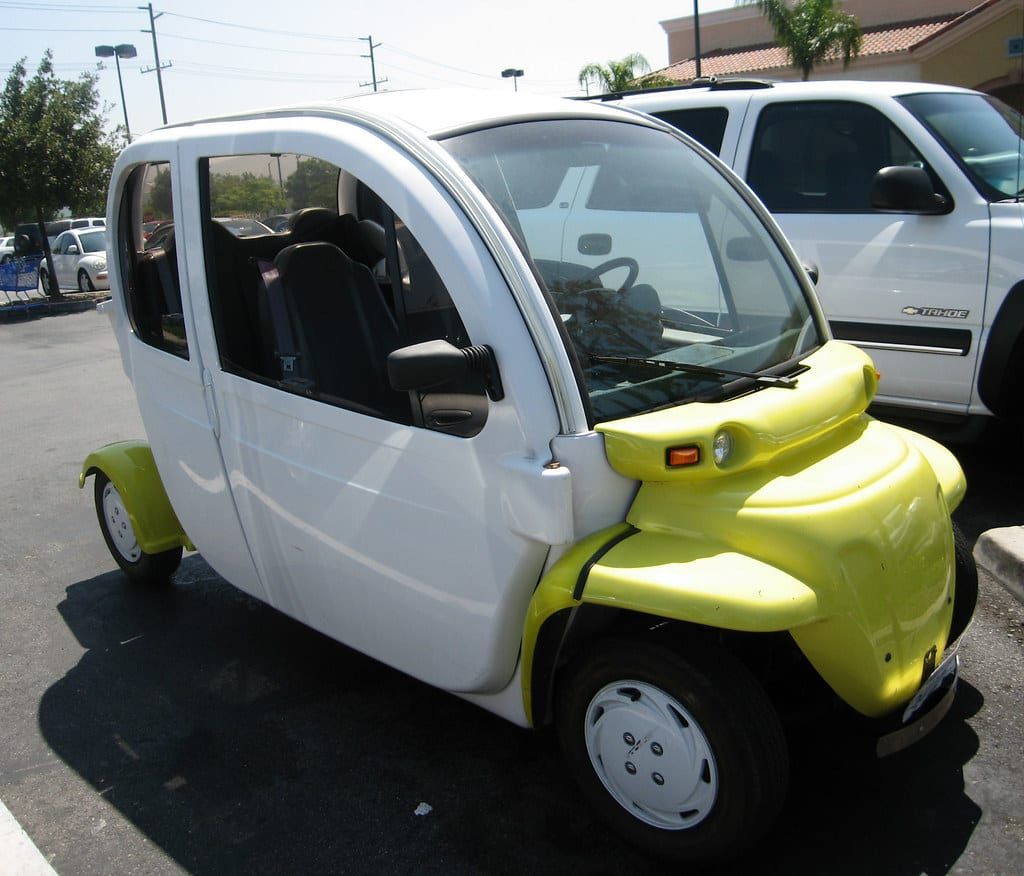
Two kinds of vehicle
The California Vehicle Code defines these two vehicles in separate sections, and the rules differ.
A golf cart has at least three wheels in contact with the ground and an unladen weight under 1,300 pounds. It is designed to run at no more than 15 miles per hour, and it is designed to carry golf equipment and no more than two people, including the driver.
A low-speed vehicle has four wheels. It can reach more than 20 and no more than 25 miles per hour in one mile on a paved, level surface, and it has a gross vehicle weight rating under 3,000 pounds. The code also calls it a neighborhood electric vehicle. It is not a golf cart, except when it operates under section 21115 or 21115.1, the sections on golf cart roads and crossings.
Dealers who sell a low-speed vehicle must give the buyer a disclosure statement about its operation.
Golf carts on public roads
The state’s Department of Motor Vehicles says a golf cart may not operate on a highway with a posted speed limit above 25 miles per hour, unless a city or county allows it by ordinance or resolution.
Section 21115 of the Vehicle Code lets a local authority do that near a golf course. A city or county can designate a highway that sits next to or leads to a golf course and runs between the course and the place where carts are parked or stored, or one inside a real estate development that offers golf facilities. Outside a development, the designation cannot run more than one mile from the golf course. The rules for the road can set crossing zones, speed limits and other operating standards. They cannot require registration, licensing or equipment, except that a cart driven in darkness must meet the equipment rules the code applies to motorcycles. None of it takes effect until signs go up along the road.
Section 21115.1 lets a local authority set up golf cart crossing zones on a street that is not a state highway, has a posted limit of 45 miles per hour or less and runs next to a golf course. Carts may use those crossings only outside darkness, and the law enforcement agency for the street must approve the setup first.
On registration, the DMV says:
- A golf cart used within one mile of a golf course, on a highway designated for that use by ordinance or resolution, needs no registration.
- To register a golf cart for the road, the owner submits an Application for Title or Registration (REG 343), proof of ownership, a Verification of Vehicle (REG 31) and a signed Statement of Facts (REG 256) that says the cart is unmodified and meets the golf cart definition.
- The verification must show a label that certifies compliance with California emission requirements for on-road use. Without that label, the cart can be registered only for off-highway use.
- A cart modified to go faster than 15 miles per hour, or to carry more than two people, counts as a regular motor vehicle and must meet the federal safety standards for a passenger vehicle.
Low-speed vehicles on public roads
The Vehicle Code treats a low-speed vehicle as a motor vehicle. Its driver follows the rules that apply to the driver of a motor vehicle, with exceptions for areas with a neighborhood electric vehicle plan and for sections 4023, 21115 and 21115.1. One of those rules: the code bars driving a motor vehicle on a highway without a valid driver’s license. The code exempts a low-speed vehicle from registration only when it operates under section 21115 or 21115.1. The DMV says insurance is required on all vehicles operated or parked on California roads.
Four more rules shape where and how it runs:
- Federal standards. A low-speed vehicle on the roadway must meet the federal safety standards for low-speed vehicles. If someone modifies one to go faster than 25 miles per hour, it must meet every standard for a passenger vehicle.
- The 35 mph limit. The operator may not drive on a roadway with a speed limit above 35 miles per hour. An area with an adopted neighborhood electric vehicle transportation plan is an exception.
- Crossings. An operator may cross a road posted above 35 miles per hour if the crossing begins and ends on a road posted at 35 or less and meets that road at about a right angle. An operator may not cross an uncontrolled intersection with a state highway unless the agency that enforces traffic there has approved it.
- Local limits. A city can restrict or prohibit low-speed vehicles by ordinance or resolution. A local police agency or the California Highway Patrol can ban them from a roadway for public safety once signs are up.
The DMV driver handbook adds that these vehicles top out at 25 miles per hour. It tells drivers to watch for “NEV USE ONLY” and “NEV ROUTE” signs and markings, and it lists golf carts among the slow-moving vehicles that may use public roads.
What Laguna Beach adds
Two sections of the city’s traffic code, Title 10 of the municipal code, speak to golf carts and low-speed vehicles by name. We found no chapter or section there that designates a golf cart route.
Sidewalks. Section 10.02.020 makes it unlawful to operate a golf cart or low-speed vehicle on any sidewalk on Pacific Coast Highway, within the central business district, on the Main Beach Boardwalk or anywhere in a city park. Authorized law enforcement personnel and people with disabilities are exempt. The same section bars bicycles from sidewalks, the Boardwalk and city parks.
Parking spaces. Section 10.06.230 lets the city manager set up parking spaces restricted to motorcycles, motor-driven cycles, motorized bicycles and golf carts. For that section, the code counts a neighborhood electric vehicle or low-speed vehicle as a golf cart when it operates under section 21115 or 21115.1. The city’s public parking lots page links a Laguna Beach golf cart parking map.
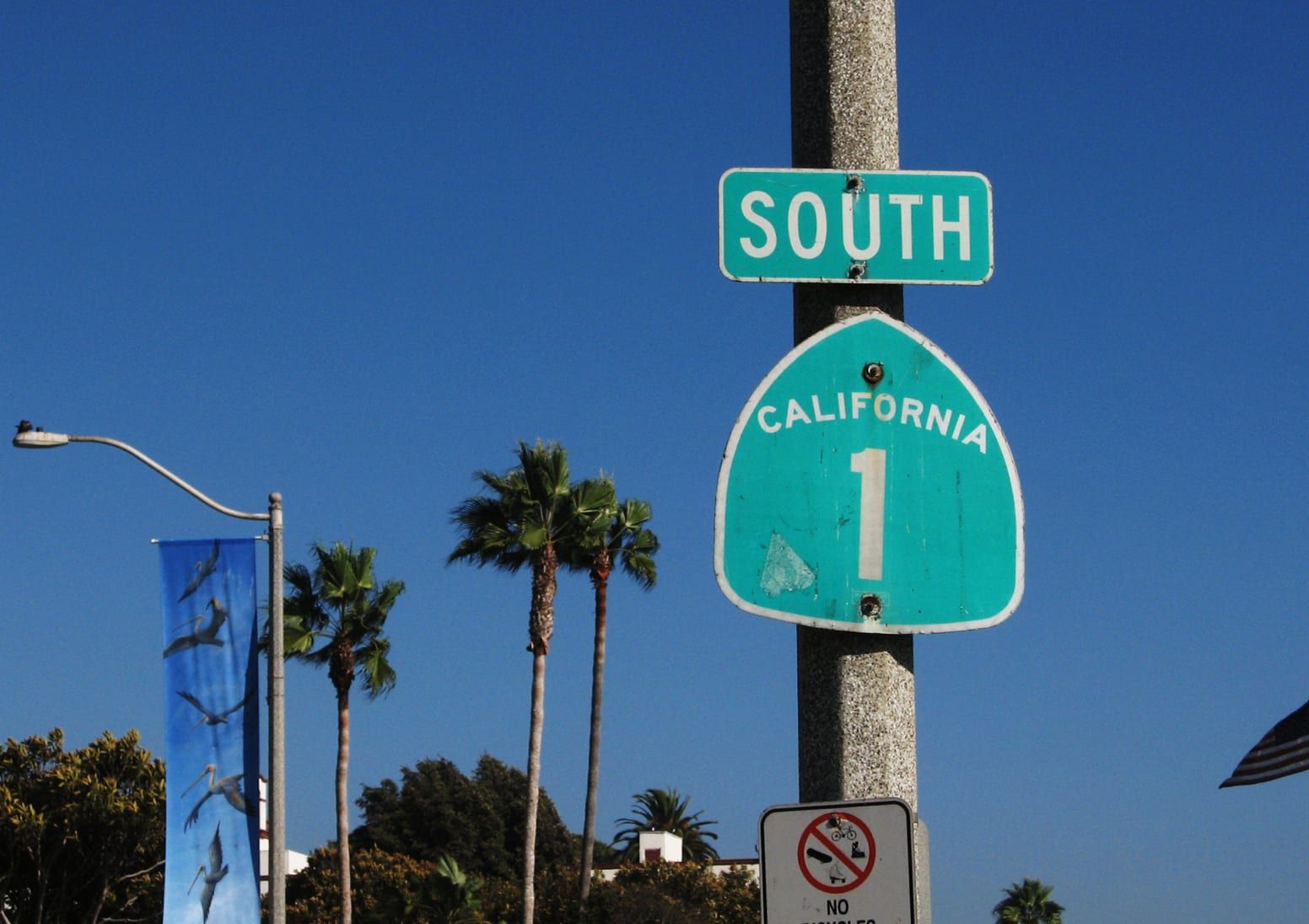
Pacific Coast Highway is State Route 1, a state highway. The state rules on crossing a state highway therefore matter wherever a trip meets the coast highway. The posted speed limit of each road you plan to use still decides whether a low-speed vehicle may use it.
Private communities
Laguna Beach has gated and HOA communities, and their associations set rules on matters such as guest parking and beach access. Ask the association whether it has rules for golf carts or low-speed vehicles on its private streets before you buy a vehicle. See Cost of living for how gated communities work, and Emerald Bay for one example.
Before you buy or drive
- Identify the vehicle under the Vehicle Code: a golf cart, or a low-speed vehicle with four wheels and a 25 mph top speed.
- Read the posted speed limit on every road in your route. A low-speed vehicle may not use a road posted above 35 mph.
- Plan around the sidewalk bans on Pacific Coast Highway, downtown, the Main Beach Boardwalk and the parks.
- Check the city’s golf cart parking map before you head to the Village. See Parking and permits for the lots.
- Confirm registration, a driver license and insurance with the DMV before the first drive.
- Ask the Laguna Beach Police Department about a particular street. The non-emergency line is (949) 497-0701.
For the other ways to move around town, see Getting around.
Questions
Is a golf cart the same as a low-speed vehicle in California?
No. The Vehicle Code defines a golf cart as a motor vehicle designed to run at no more than 15 mph and carry no more than two people. A low-speed vehicle has four wheels and reaches more than 20 and up to 25 mph, and the code counts it as a golf cart only on golf cart roads and crossings.
Does Laguna Beach allow golf carts on sidewalks?
No on the sidewalks that city code names. It bars golf carts and low-speed vehicles from sidewalks on Pacific Coast Highway, in the central business district, on the Main Beach Boardwalk and in city parks. Law enforcement and people with disabilities are exempt.
Where can you park a golf cart in Laguna Beach?
The city's public parking lots page links a golf cart parking map. City code also lets the city manager set aside spaces for motorcycles, motor-driven cycles, motorized bicycles and golf carts.
Can a low-speed vehicle use any street?
No. State law keeps a low-speed vehicle off roads posted above 35 mph, with narrow crossing exceptions. Cities and police can restrict or prohibit it further.
Get the moving checklist
The printable checklist by email: before you move, moving week and your first 30 days.
Living here
More for your move
-
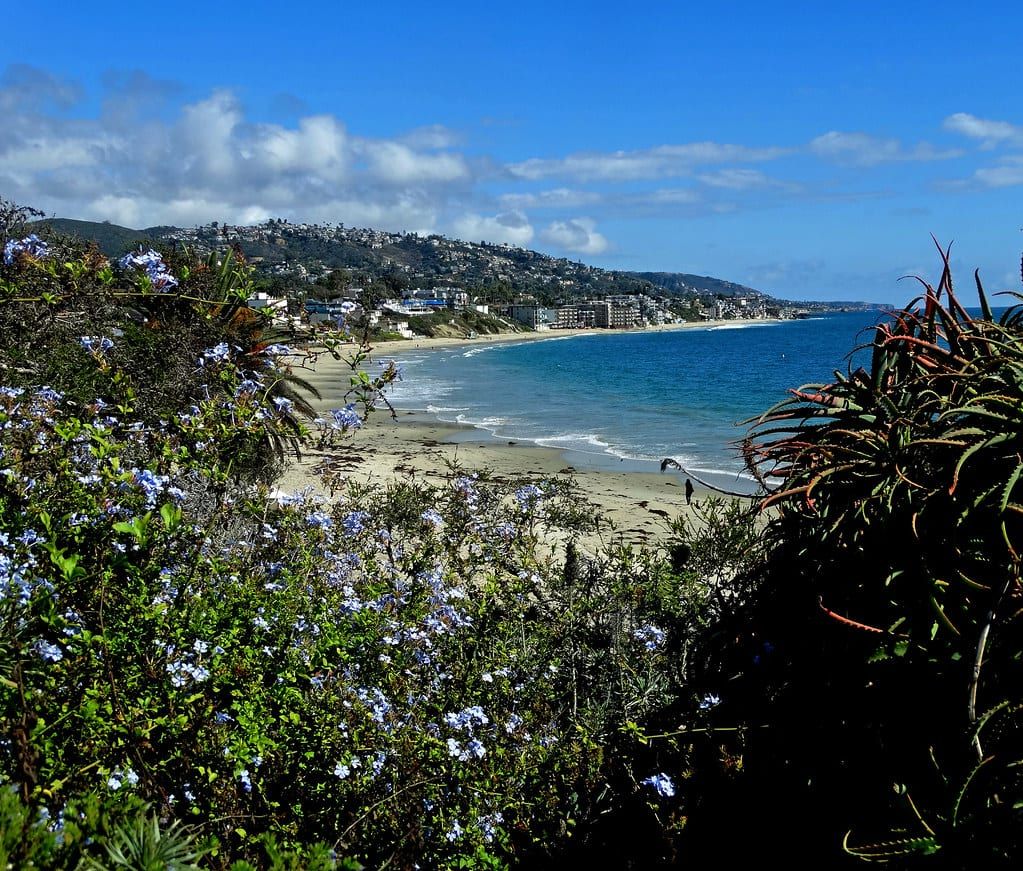
- Schools The Laguna Beach Unified School District runs the public schools in town. This guide names each school, says where it is and explains how attendance, enrollment and transfers work.
-
-
-
-
Last reviewed
Sources (17)
- Vehicle Code 345: a golf cart has at least three wheels, an unladen weight under 1,300 pounds, operates at no more than 15 mph and is designed to carry golf equipment and no more than two persons including the driver: leginfo.legislature.ca.gov, checked 2026-10-09
- Vehicle Code 385.5: a low-speed vehicle has four wheels, reaches more than 20 and no more than 25 mph in one mile on a paved level surface, has a gross vehicle weight rating under 3,000 pounds; it is not a golf cart except when operated under sections 21115 or 21115.1; it is also known as a neighborhood electric vehicle: leginfo.legislature.ca.gov, checked 2026-10-09
- Vehicle Code 21115: a local authority may designate a highway adjacent to or giving access to a golf course and between the course and where carts are parked or stored, or within a development offering golf facilities, for combined use; limit of one mile from the course outside a development; signs required; no registration, licensing or equipment requirement except that a cart operated in darkness is subject to section 24001.5; golf cart includes a low-speed vehicle: leginfo.legislature.ca.gov, checked 2026-10-09
- Vehicle Code 24001.5: a golf cart is subject only to the equipment provisions that apply to a motorcycle: leginfo.legislature.ca.gov, checked 2026-10-09
- Vehicle Code 21115.1: crossing zones for golf carts on non-state-highway streets of 45 mph or less next to a golf course, not during darkness, with law enforcement approval: leginfo.legislature.ca.gov, checked 2026-10-09
- DMV handbook 7.045: golf carts are motor vehicles; they may not operate on a highway posted above 25 mph except by local ordinance or resolution; on-road registration forms and emissions compliance label; modified carts become regular motor vehicles; carts within one mile of a golf course on a designated highway are exempt from registration: dmv.ca.gov, checked 2026-10-09
- Vehicle Code 21250 to 21266 (Article 5.5): a low-speed vehicle and its driver are subject to the motor vehicle rules except under a neighborhood electric vehicle plan and sections 4023, 21115 and 21115.1; dealers give buyers a disclosure statement; federal safety standards; no operation on roads posted above 35 mph with limited crossing exceptions; local authorities and police may restrict or prohibit: leginfo.legislature.ca.gov, checked 2026-10-09
- Vehicle Code 12500: a person may not drive a motor vehicle upon a highway without a valid driver's license, except persons expressly exempted: leginfo.legislature.ca.gov, checked 2026-10-09
- Vehicle Code 4023: a low-speed vehicle operated under section 21115 or 21115.1 is exempt from registration: leginfo.legislature.ca.gov, checked 2026-10-09
- DMV driver handbook: NEVs and LSVs reach a maximum of 25 mph and are restricted from roads above 35 mph; NEV signs and markings; golf carts listed among slow-moving vehicles on public roads: dmv.ca.gov, checked 2026-10-09
- Insurance is required on all vehicles operated or parked on California roads: dmv.ca.gov, checked 2026-10-09
- Laguna Beach municipal code 10.02.020: golf carts and low speed vehicles barred from any sidewalk on Pacific Coast Highway, in the central business district, on the Main Beach Boardwalk and in city parks; exceptions for law enforcement and persons with disabilities: ecode360.com, checked 2026-10-09
- Laguna Beach municipal code 10.06.230: the city manager may establish parking spaces restricted to motorcycles, motor-driven cycles, motorized bicycles and golf carts; golf cart includes a neighborhood electric vehicle or low speed vehicle operated under sections 21115 or 21115.1: ecode360.com, checked 2026-10-09
- City public parking lots page links a Laguna Beach Golf Cart Parking Map: lagunabeachcity.net, checked 2026-10-09
- Police Department non-emergency number (949) 497-0701: lagunabeachcity.net, checked 2026-10-09
- Caltrans: State Route 1 (SR-1), Pacific Coast Highway, is one of two State Highways that connect Laguna Beach to the rest of Orange County: files.ceqanet.lci.ca.gov, checked 2026-10-09
- Laguna Beach has gated communities whose HOA rules shape guest parking and beach access: realatrends.com, checked 2026-10-09